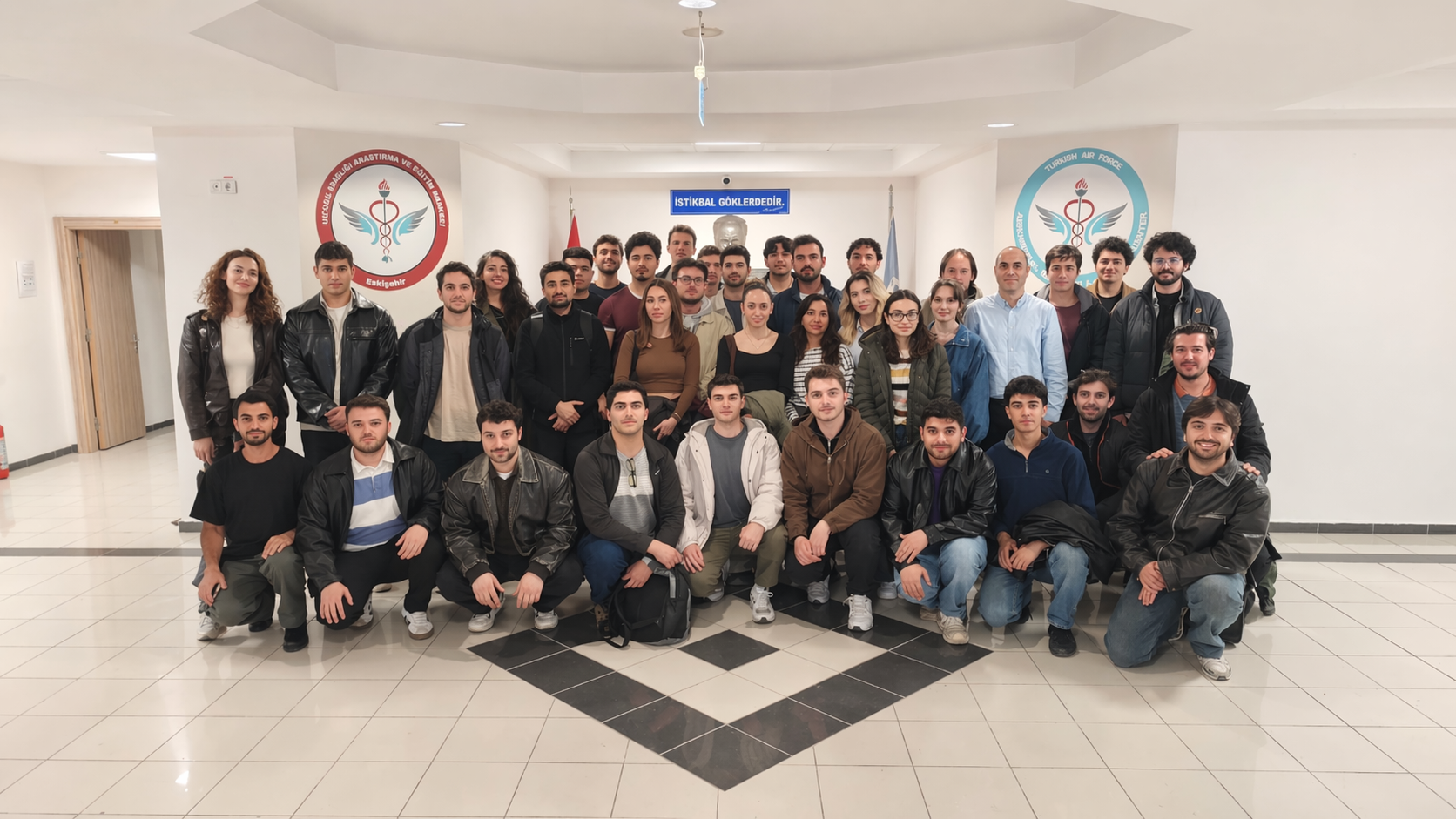


Our 4th-year students from the Department of Aeronautical Engineering at Eskisehir Osmangazi University Faculty of Engineering visited the Aeromedical Research and Training Center (USAEM), one of the world's leading facilities in the field of aviation medicine and aircrew health. During the technical trip to the center, which operates under the Eskisehir Combat Air Force Command, the engineers of the future had the opportunity to observe flight physiology and advanced technology training systems on-site.
As part of the visit, a comprehensive briefing was initially given to the students by the President of USAEM, Air Force Col. Uğur ER, and the Aerospace Medicine Specialists serving at the center, Air Force Medical Col. Nazım ATA and Air Force Medical Col. Levent ŞENOL. The presentations detailed the center's international activities, strategic importance, and technical capabilities.
Laboratories Pushing the Boundaries of Aviation Examined;
Following the briefing, the students proceeded to the application areas and toured the high-tech laboratories where aircrews are prepared for harsh weather conditions and physical stress factors. Within the scope of the program, detailed technical information was shared regarding the following training and test units:
-
G-Lab (Human Centrifuge Training): In this laboratory, where the performance of pilots under high G-forces is tested, students were given practical explanations of the procedures and maneuvers used by pilots to counteract these forces.
-
Gyro Lab (Spatial Disorientation): At the center, where disorientation and illusions experienced during flight are simulated for pilots, information was provided on the correct behavioral procedures to be executed in such situations.
-
Night Vision Training Laboratory: In the unit where the anatomy and physiology of night vision are explained, illusions encountered during night operations were demonstrated.
-
Low-Pressure Training Laboratory: The effects of high-altitude pressure changes and oxygen deficiency on pilots were examined.
-
Normobaric Hypoxia Training Laboratory: Technical details were shared regarding modern hypoxia training, which is conducted by reducing the amount of oxygen in the breathed air without lowering the pressure.
-
Ejection Seat Training Laboratory: The operating mechanism of emergency ejection systems and the physical effects of this process on the human body were explained.
-
Physical Conditioning Training Laboratory: The physical endurance tests and conditioning processes required by aircrews for high-performance missions were observed on-site.
Following the presentations, our prospective aeronautical engineering students had the chance to observe the training by watching the ongoing test activities live.
The visit concluded with a souvenir photo shoot.